Sale Price:
$9.99
Original Price:
$14.99
What do we owe each other in a broken world?
In a time when suffering is often ignored, minimized, politicized, or turned into background noise, Humanitarianism is a bold and unflinching call to remember what people are worth.
In this powerful nonfiction book, Allen DeKeyser confronts the hard realities too many people live with every day: poverty, trauma, grief, disability, addiction, mental illness, violence, aging, injustice, rejection, and the quiet cruelty of being overlooked. With honesty, moral clarity, and deep compassion, he challenges readers to face a difficult truth: people are not only suffering from pain itself, but from the world’s cold response to that pain.
This is not a book about pity.
It is a book about dignity.
About responsibility.
About what happens when compassion is uneven, when institutions fail, when communities grow numb, and when human worth becomes conditional.
Humanitarianism asks the questions many people avoid:
Why do some lives receive tenderness while others receive suspicion?
Why are the vulnerable so often left to carry the heaviest burdens alone?
What kind of humanity are we practicing in our families, communities, systems, and everyday choices?
And what would it look like to become the kind of people who do not look away?
Raw, thought-provoking, and deeply human, this book is for readers who care about justice, suffering, mental health, compassion, faith, trauma, and the moral responsibility we carry toward one another.
If you are tired of shallow empathy, selective compassion, and a world that keeps mistaking indifference for strength, this book will challenge you, confront you, and call you higher.
Because humanitarianism is not just an idea.
It is a responsibility.
What do we owe each other in a broken world?
In a time when suffering is often ignored, minimized, politicized, or turned into background noise, Humanitarianism is a bold and unflinching call to remember what people are worth.
In this powerful nonfiction book, Allen DeKeyser confronts the hard realities too many people live with every day: poverty, trauma, grief, disability, addiction, mental illness, violence, aging, injustice, rejection, and the quiet cruelty of being overlooked. With honesty, moral clarity, and deep compassion, he challenges readers to face a difficult truth: people are not only suffering from pain itself, but from the world’s cold response to that pain.
This is not a book about pity.
It is a book about dignity.
About responsibility.
About what happens when compassion is uneven, when institutions fail, when communities grow numb, and when human worth becomes conditional.
Humanitarianism asks the questions many people avoid:
Why do some lives receive tenderness while others receive suspicion?
Why are the vulnerable so often left to carry the heaviest burdens alone?
What kind of humanity are we practicing in our families, communities, systems, and everyday choices?
And what would it look like to become the kind of people who do not look away?
Raw, thought-provoking, and deeply human, this book is for readers who care about justice, suffering, mental health, compassion, faith, trauma, and the moral responsibility we carry toward one another.
If you are tired of shallow empathy, selective compassion, and a world that keeps mistaking indifference for strength, this book will challenge you, confront you, and call you higher.
Because humanitarianism is not just an idea.
It is a responsibility.


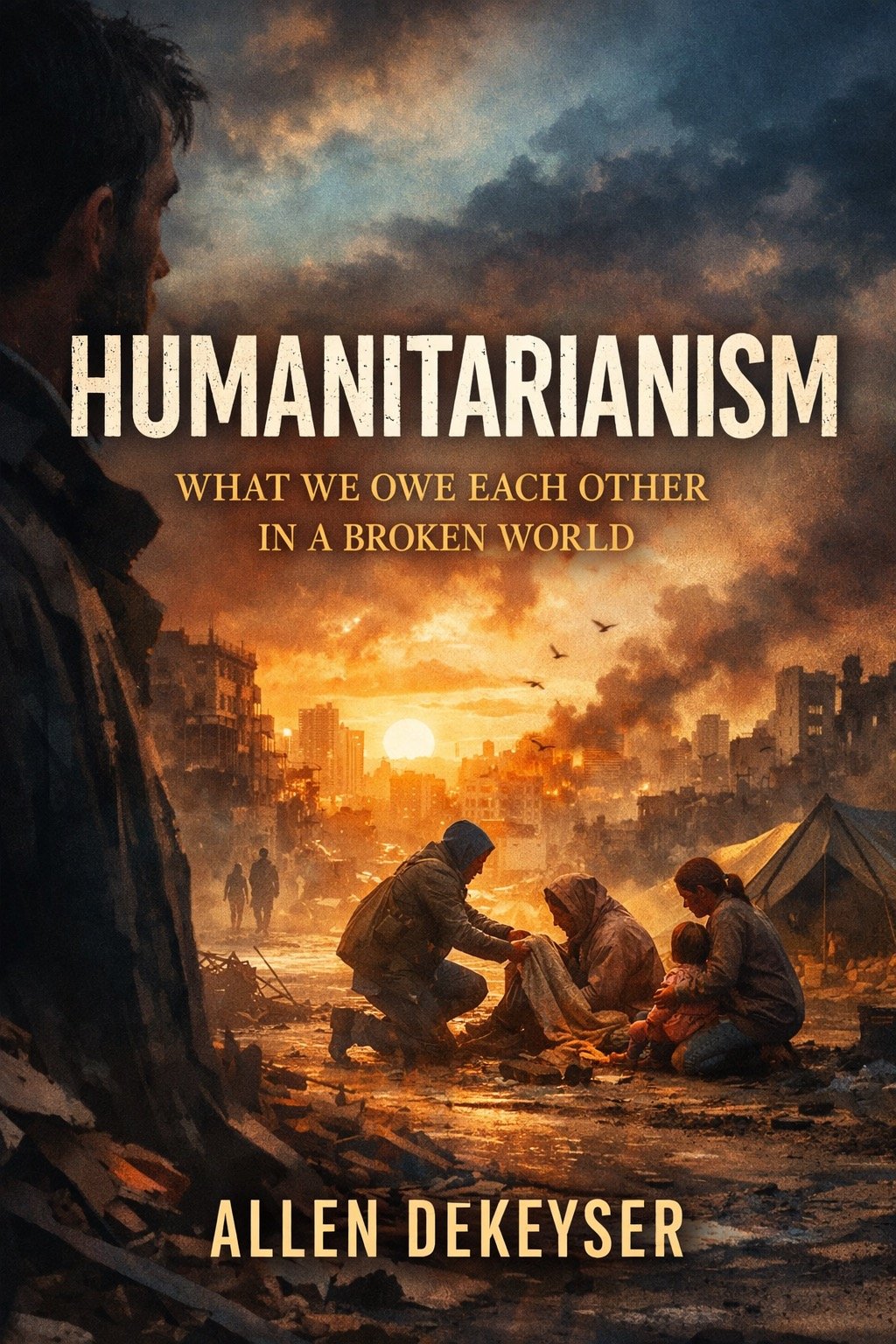 Image 1 of 1