

 Image 1 of 1









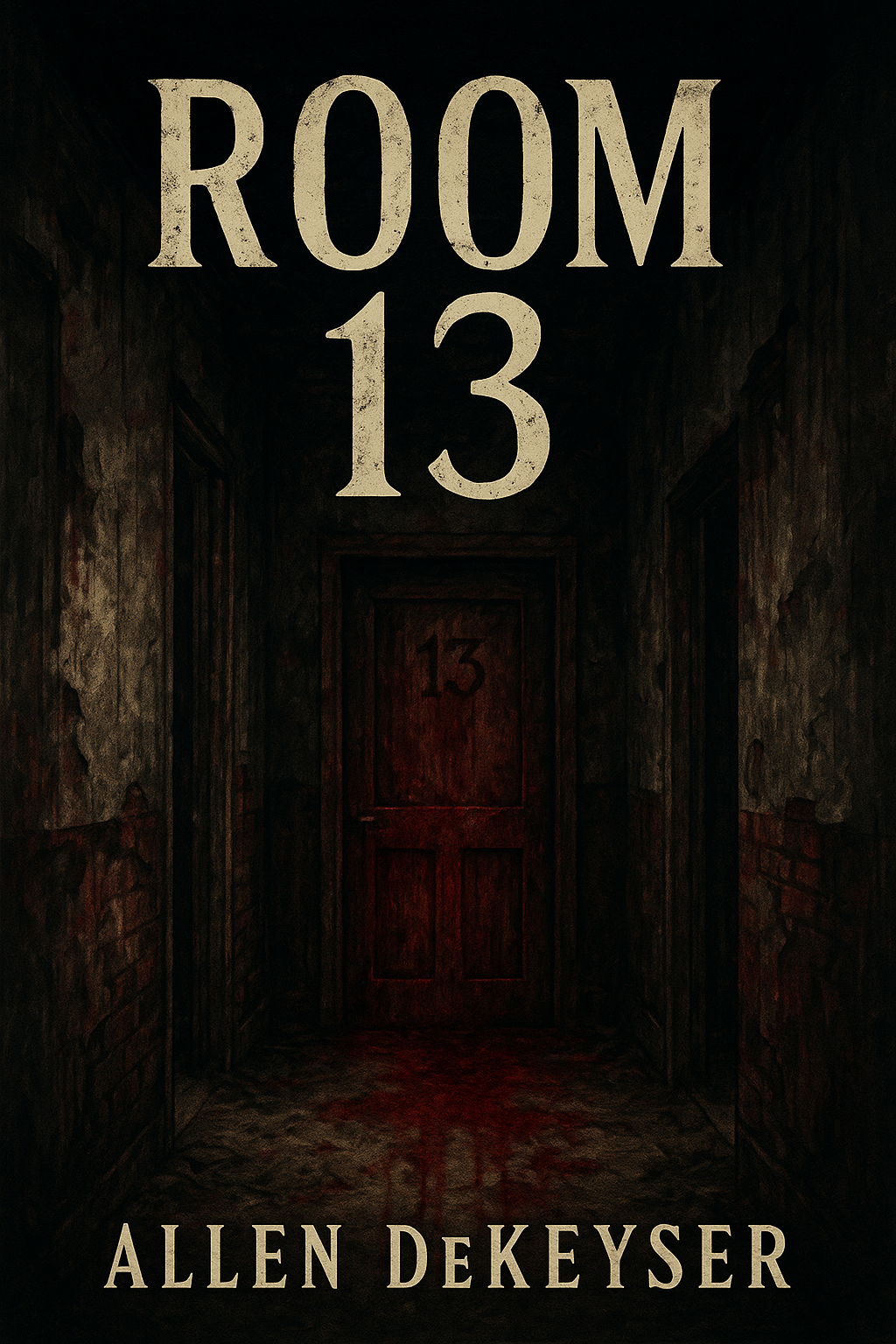
Room 13 is the room nobody in the house ever talks about, not even in passing. You feel it before you see it—like the hallway air thickens, slows, and asks you to turn around. The door itself tells a story: paint chipped, wood bowed, hinges rusted in a way that looks almost intentional, like the house wanted this door to age faster than the others.
The number “13” isn’t printed. It’s carved, jagged and uneven, like someone scratched it in with a shaking hand. Every stroke digs deep, as if whoever did it wasn’t trying to label a room—they were trying to warn the next person who walked by.
Inside, the temperature drops. Not cold enough to see your breath, but cold enough for your bones to feel it. The room smells faintly of damp wood and old secrets—like something was kept here far longer than it should’ve been.
The wallpaper is peeled in strips, exposing dark stains underneath. Not blood, but something that makes you question what could’ve seeped through the walls and stayed there all these years. The floorboards creak even when you’re not moving, almost like footsteps pacing just out of sight.
Against the far wall sits a single chair—wrongly positioned, too close to the corner, angled like someone dragged it forward and then changed their mind halfway. The legs of the chair have deep scratches in them, claw-like, desperate.
There’s a mirror too. Old. Silvering gone. And every time you look at it, the reflection seems just a fraction… delayed. Like the room remembers more than you do, and it's waiting for you to remember too.
Lighting doesn’t work here. Bulbs burn out instantly. Flashlights flicker. This is a room that refuses to be seen fully. A room that holds the weight of something unfinished.
And in the silence, you swear you hear someone breathing—not loud, not obvious. Just soft, steady, as if whoever lived their worst moments in Room 13 never truly left.
Room 13 is the room nobody in the house ever talks about, not even in passing. You feel it before you see it—like the hallway air thickens, slows, and asks you to turn around. The door itself tells a story: paint chipped, wood bowed, hinges rusted in a way that looks almost intentional, like the house wanted this door to age faster than the others.
The number “13” isn’t printed. It’s carved, jagged and uneven, like someone scratched it in with a shaking hand. Every stroke digs deep, as if whoever did it wasn’t trying to label a room—they were trying to warn the next person who walked by.
Inside, the temperature drops. Not cold enough to see your breath, but cold enough for your bones to feel it. The room smells faintly of damp wood and old secrets—like something was kept here far longer than it should’ve been.
The wallpaper is peeled in strips, exposing dark stains underneath. Not blood, but something that makes you question what could’ve seeped through the walls and stayed there all these years. The floorboards creak even when you’re not moving, almost like footsteps pacing just out of sight.
Against the far wall sits a single chair—wrongly positioned, too close to the corner, angled like someone dragged it forward and then changed their mind halfway. The legs of the chair have deep scratches in them, claw-like, desperate.
There’s a mirror too. Old. Silvering gone. And every time you look at it, the reflection seems just a fraction… delayed. Like the room remembers more than you do, and it's waiting for you to remember too.
Lighting doesn’t work here. Bulbs burn out instantly. Flashlights flicker. This is a room that refuses to be seen fully. A room that holds the weight of something unfinished.
And in the silence, you swear you hear someone breathing—not loud, not obvious. Just soft, steady, as if whoever lived their worst moments in Room 13 never truly left.